
UCLA scientists receive CIRM grants to advance stem cell-based treatments for vision loss and infertility, and improve CAR T-cell therapy
UCLA Broad Stem Cell Research Center faculty are leading and collaborating on $9.9 million in new grants from the California Institute for Regenerative Medicine, the state’s stem cell agency, to advance new stem cell-based treatments for irreversible vision loss and infertility and investigate the factors that determine why CAR T-cell therapies work for some patients and not others.
Mapping retinal environments to improve regenerative therapies for vision loss
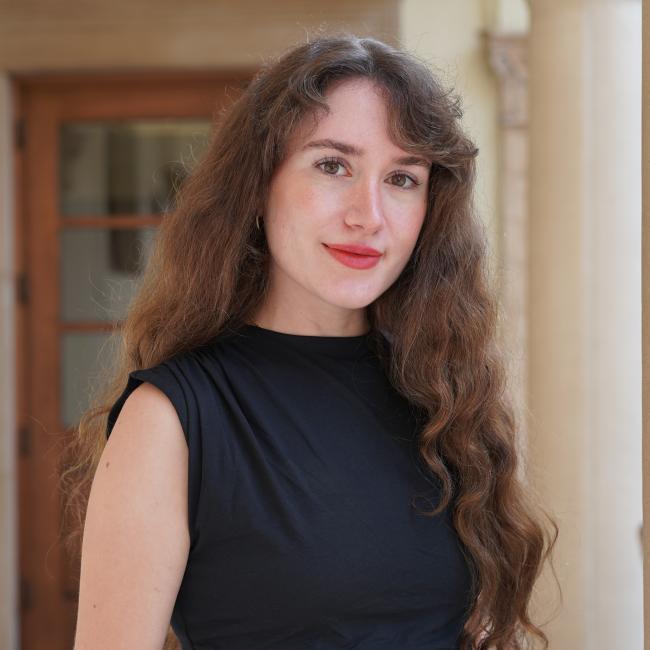
Dr. Aya Barzelay-Wollman, assistant professor of ophthalmology
Millions of people with geographic atrophy — an advanced, late-stage form of dry age-related macular degeneration — experience progressive, irreversible vision loss, and no existing treatment can restore retinal tissue that has been lost to this disease. Stem cell-based approaches offer the possibility of replacing damaged retinal cells, but the survival of transplanted cells can be unpredictable in diseased tissue.
Barzelay-Wollman’s $2.5 million award will support her laboratory’s work to understand why. Her research will focus on the transition zone — the irregular boundary between surviving retina and areas of complete atrophy, where some of the last viable retinal cells are found. By studying this critical region in human tissue, her team aims to identify the biological conditions that determine whether transplanted retinal cells survive and integrate or fail.
Using human donor tissue, stem cell-derived retinal cells and advanced molecular analyses, Barzelay-Wollman and her team will map the cellular, molecular and structural features of distinct retinal environments and test how transplanted cells respond within them. The findings could reveal which local conditions help or hinder transplanted-cell survival and whether those barriers can be modified, providing a foundation for more effective regenerative therapies for geographic atrophy.
The project also includes a collaboration with Dr. Tsu-Chin “T-C.” Tsao, distinguished professor of mechanical and aerospace engineering at UCLA, who will contribute engineering expertise to a component of the study involving precision robotics.
A physician-scientist, Barzelay-Wollman treats patients with retina diseases at the UCLA Doris Stein Eye Research Center and is a former clinical fellow in the Broad Stem Cell Research Center Training Program.
Mapping how human germ cells form to advance infertility treatment
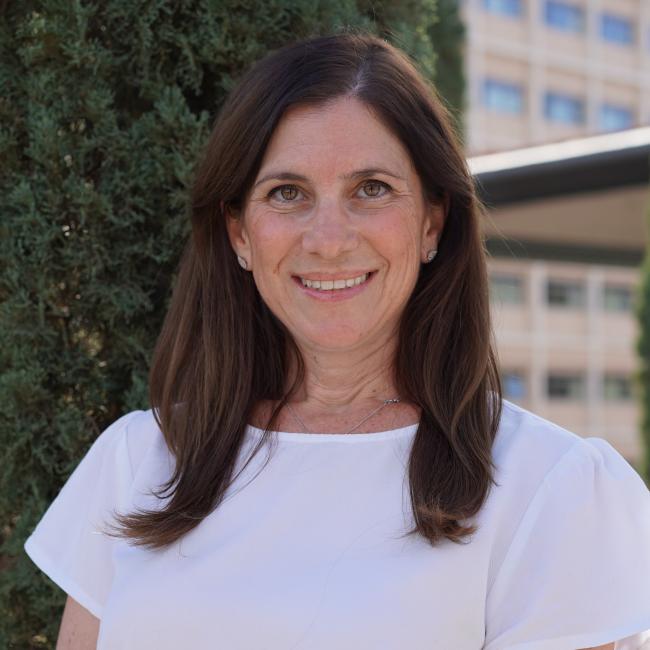
Dr. Amander Clark, professor of molecular, cell and developmental biology
Infertility affects about one in six people of reproductive age, yet many cases remain unexplained. Some may originate very early in embryonic development, when primordial germ cells — the cells that eventually give rise to eggs and sperm — first form.
Clark is a co-investigator on a collaborative project led by Dr. Magdalena Zernicka-Goetz, professor of biology and biological engineering at the California Institute of Technology. Their $2.4 million award will support efforts to understand the surrounding tissues and signals that guide primordial germ cells as they emerge.
Using two complementary stem cell-derived models of early human development, their teams will map where and when primordial germ cells arise, identify the neighboring tissues that guide them and determine which molecular signals are essential for their development.
By creating a more detailed blueprint of this process, the researchers hope to uncover early mechanisms that contribute to infertility and help scientists more accurately recreate human germ cell development in the lab, laying a foundation for future approaches to diagnosis and treatment.
Clark is the inaugural director of the UCLA Center for Reproductive Science, Health and Education.
Uncovering why CAR T-cell responses succeed or fail in cancer and autoimmune diseases
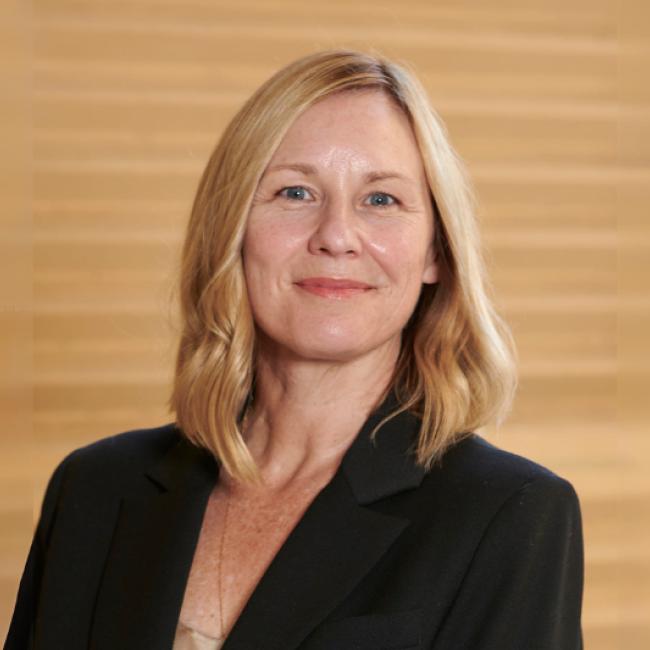
Dr. Dino Di Carlo, Armond and Elena Hairapetian Professor and Chair of Bioengineering
CAR T-cell products that meet the same quality standards can perform well in some patients but fail in others. Understanding what drives those differences is increasingly important as CAR T-cell therapies expand beyond cancer into autoimmune and neuro-immune diseases such as lupus and multiple sclerosis.
Di Carlo is a co-investigator on a collaborative project led by Dr. Mohamed Abou-el-Enein, associate professor of clinical medicine in oncology, pediatrics, and stem cell biology and regenerative medicine at the Keck School of Medicine of USC. Their $2.49 million award will support efforts to uncover the cellular mechanisms that distinguish productive CAR T-cell responses from those that become dysfunctional.The researchers will investigate how factors including the starting state of a patient’s immune cells, the genetic elements controlling CAR expression and patterns of antigen exposure influence CAR T-cell function.
Abou-el-Enein’s laboratory will use high-dimensional flow cytometry and computational analysis to build a detailed atlas of CAR T-cell states across patients and diseases. Di Carlo’s laboratory will leverage its nanovial technology and Cell-Cell-seq approach to study individual CAR T cells as they interact with their targets, linking whether a target cell is killed and other functional responses with the gene expression patterns in both cells. By integrating these interaction-level insights with the broader cellular atlas, the team aims to identify molecular and cellular patterns associated with effective CAR T-cell responses and dysfunction.
This resource could help identify more informative measures of therapeutic potency and guide the development of more consistent and durable cell therapies across patients and diseases.
Mapping new immune targets in sarcoma using stem cell-based platforms
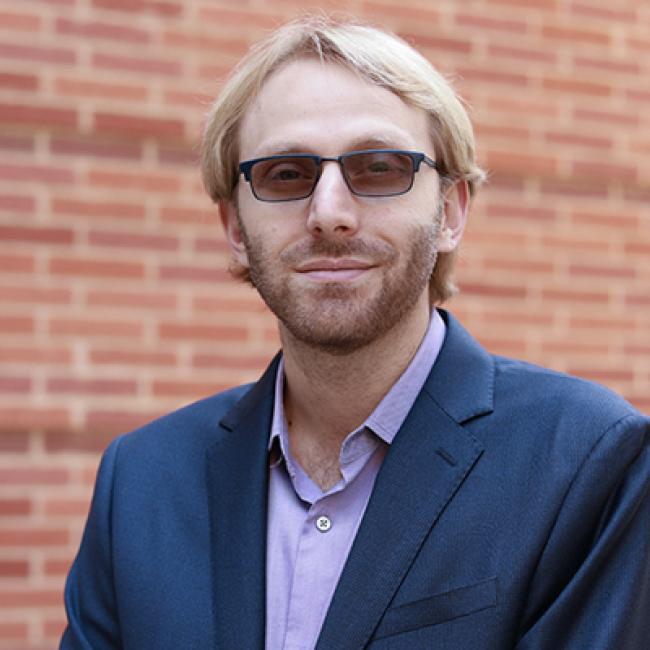
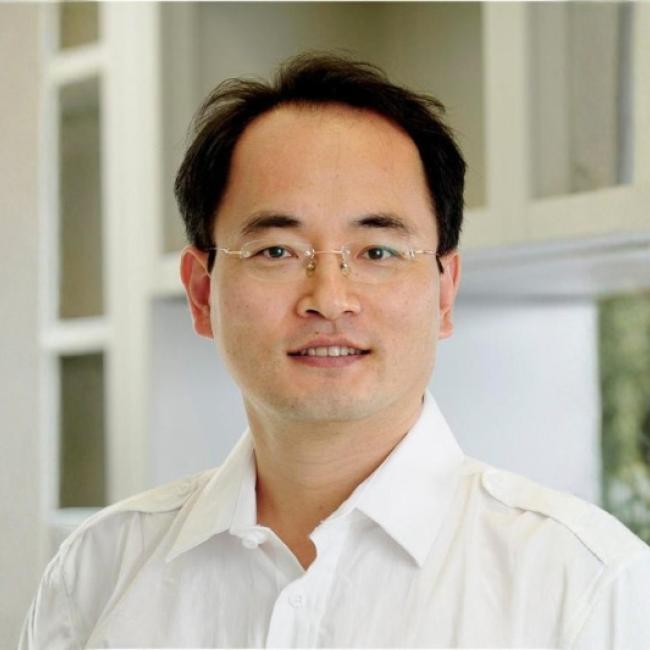
Dr. Kitai Kim, director of the Human Stem Cell and Genome Engineering Center at UCLA
Cancer immunotherapies depend in part on the ability of T cells to recognize neoantigens — abnormal protein fragments produced by tumor cells. But many tumors, including sarcomas, have relatively few of the DNA mutations that typically generate these targets, limiting the number of neoantigens available for immune-based therapies.
Kim’s $2.5 million award will support efforts to identify another potential source of tumor-specific targets: changes in RNA splicing that generate neoantigens, including some that may be shared across tumors from different patients. The project will include a collaboration with Dr. Fumito Ito, professor of surgery and immunology and immune therapeutics at the Keck School of Medicine of USC.
A major challenge in studying these immune responses is the lack of scalable, reproducible human models that can show both which antigens tumor cells present and whether T cells recognize them. The team aims to overcome this limitation by combining stem cell-derived immune cells, human tumor models and automated screening to study these interactions at scale. The project builds on robotic automation developed through a previous CIRM infrastructure award.
The researchers will use molecular analyses to identify neoantigens created by abnormal RNA splicing in sarcoma cells, including some that may be shared across patients. They will then use stem cell-derived immune cells and robotic screening to determine which of these targets are actually recognized by T cells. Bioprinted 3D models incorporating primary sarcoma cells will allow the team to study these tumor-immune interactions in a more human-relevant environment.
By linking neoantigen discovery directly to functional testing in scalable human models, the project will explore whether potentially actionable immune targets can be identified after surgical removal of a sarcoma. The long-term goal is to develop a reproducible platform that could support future studies of residual disease while also having broader applications in solid-tumor immunotherapy, tissue engineering and regenerative medicine.
Contact
Meet the Researchers
- Assistant Professor, Ophthalmology
- Professor, Molecular, Cell and Developmental Biology
- Armond and Elena Hairapetian Professor and Chair, Bioengineering
- Director, UCLA Human Stem Cell and Genome Engineering Center