
UCLA researchers awarded $1.7 million Department of Defense grant to advance next-generation CAR T-cell therapies for prostate cancer
Researchers from the UCLA Health Jonsson Comprehensive Cancer Center have received a $1.7 million grant from the U.S. Department of Defense’s Congressionally Directed Medical Research Programs (CDMRP) to develop new strategies to improve CAR T-cell therapies for metastatic castration-resistant prostate cancer, an advanced form of the disease with limited treatment options.
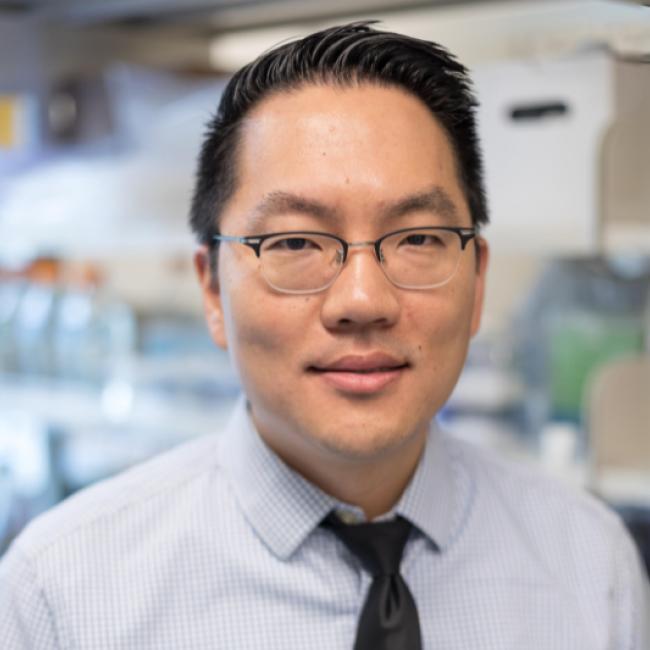
The team, led by Dr. John Lee, associate professor-in-residence in the Division of Hematology/Oncology at the David Geffen School of Medicine at UCLA, with collaborators Dr. Owen Witte, Presidential Chair in Developmental Immunology in the Department of Microbiology, Immunology, and Molecular Genetics at UCLA, and Dr. Dino Di Carlo, Armond and Elena Hairapetian Professor and Chair of Bioengineering at the UCLA Samueli School of Engineering, will investigate a new approach that combines engineered nanovial technology with single-cell analysis to rapidly evaluate and optimize dual-targeted CAR T-cell therapies. The goal is to develop more effective treatments that overcome the challenges that have limited the success of CAR T-cell therapy in solid tumors such as prostate cancer.
CAR T-cell therapy is a type of immunotherapy that modifies a patient’s own immune cells to recognize and attack cancer cells. While this approach has produced significant advances in blood cancers, its effectiveness against prostate cancer has been limited, in part because prostate tumors are highly diverse and can evade treatment by changing the markers targeted by immune cells.
This project will use tiny hydrogel-based structures called nanovials to capture individual interactions between prostate cancer cells and CAR T cells. By combining nanovials with single-cell sequencing, the researchers aim to identify how cancer cells resist immune attacks and use those insights to design improved therapies. The team will focus on developing dual-targeted CAR T cells that recognize two prostate cancer markers, STEAP1 and PSMA, which may help prevent treatment resistance by targeting a broader range of tumor cells.
The research builds on the team’s previous development of STEAP1-targeted CAR T cells, which are currently being evaluated in an early-phase clinical trial for patients with metastatic castration-resistant prostate cancer. Through this new grant, the researchers will use the nanovial platform to screen hundreds of potential CAR T-cell designs and identify therapies with improved cancer-killing ability, persistence and potential for future clinical translation.
“Metastatic prostate cancer remains a major clinical challenge, and new treatment strategies are urgently needed,” Lee said. “This funding will allow us to combine advances in bioengineering and immunotherapy to better understand tumor-immune interactions and accelerate the development of next-generation CAR T-cell therapies for patients.”
Lee, Witte and Di Carlo are all members of the UCLA Health Jonsson Comprehensive Cancer Center and the UCLA Broad Stem Cell Research Center.
Contact

Meet the Researchers

- University Professor, Microbiology, Immunology and Molecular Genetics
- Associate Professor-in-Residence, Hematology/Oncology

- Armond and Elena Hairapetian Professor and Chair, Bioengineering