
How personalized vaccines are changing the fight against brain cancer
When Jamil Newirth was just 32 years old, doctors told him he had terminal brain cancer and had about 17 months to live.
That was 14 years ago.
Today, at 46, the Hawaii native is a practicing attorney in Maui, a future he once feared he would never have. He credits his remarkable survival in part to a novel cancer vaccine developed at UCLA that uses the body's own immune system to recognize and attack brain tumors.
Newirth is among a group of patients who have experienced long-term survival after receiving the personalized vaccine through clinical trials led by UCLA neurosurgeon Linda Liau, MD, PhD and tumor immunologist Robert Prins, PhD.
For more than two decades, Dr. Liau and her team at the UCLA Health Jonsson Comprehensive Cancer Center have been working to develop new treatments for glioblastoma, the most aggressive and deadly form of brain cancer. Their work is now helping shape the next generation of cancer vaccines and combination immunotherapies that could offer new hope for patients facing this devastating disease.
"Patients like Jamil are such an inspiration to me and my team," said Dr. Liau, chair of neurosurgery at the David Geffen School of Medicine at UCLA. "He and other patients like him are what inspires me to go to work each day and to maintain hope that immunotherapy could potentially lead to a cure for brain cancer someday."
A devastating diagnosis
In 2012, Newirth had just graduated from the University of Hawaii William S. Richardson School of Law and was preparing for the bar exam when he began experiencing severe headaches.
After multiple emergency room visits, where his symptoms were initially attributed to stress, he developed nausea, vomiting and numbness on the left side of his body. An MRI eventually revealed a large brain tumor. He was diagnosed with glioblastoma.
Glioblastoma grows and spreads quickly. Even after standard treatments such as surgery, chemotherapy and radiation, the disease almost always returns.
"I wasn't really given any hope when I was diagnosed," Newirth recalled.
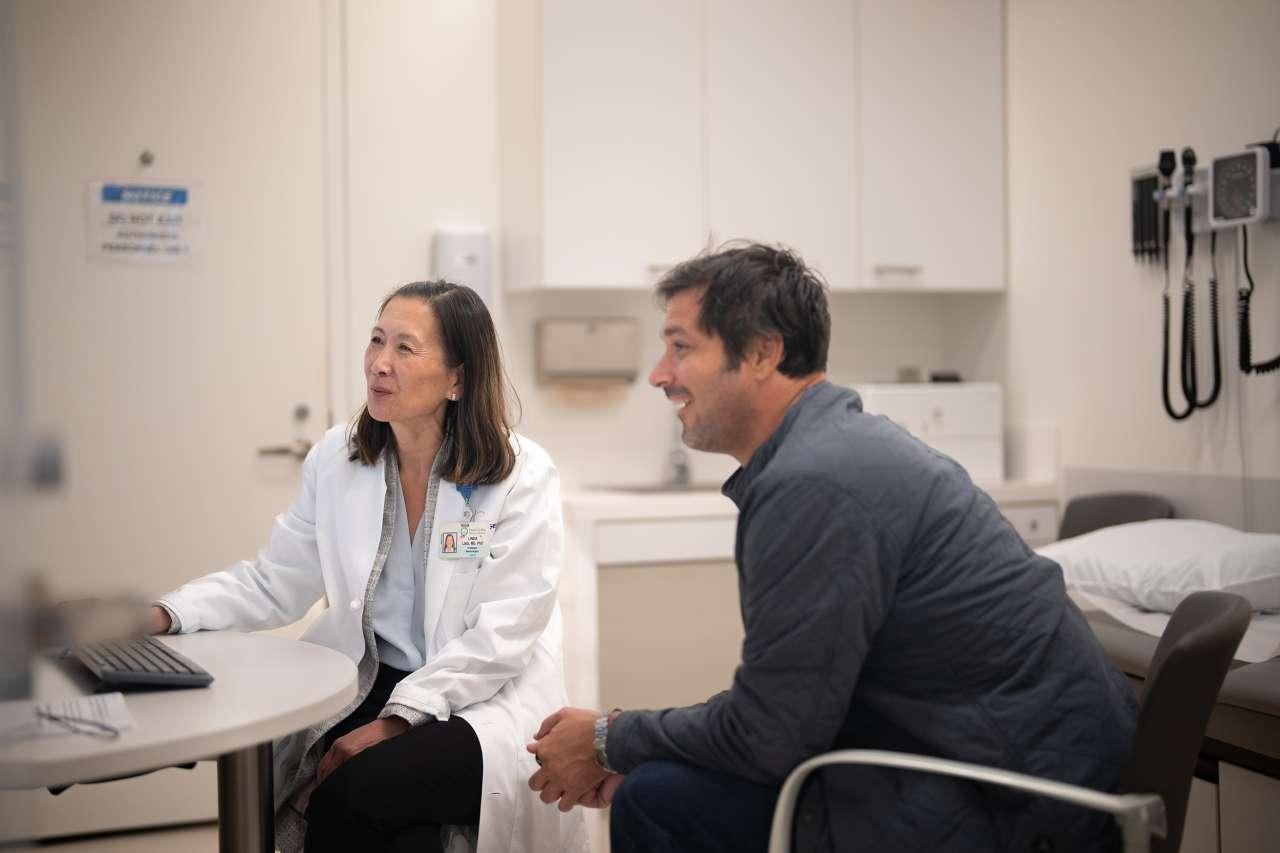
Determined to find another option, he began searching for a neurosurgeon who could offer something beyond standard treatment. That search led him to Dr. Liau, who was enrolling patients in a clinical trial testing the first personalized brain cancer vaccine.
"Dr. Liau is confident, caring and does everything with a personal touch," Newirth said. "She even flew back early from her vacation to do my surgery and start my treatment. You can tell she just really cares."
Teaching the immune system to fight brain cancer
One of the biggest challenges in treating glioblastoma and other malignant brain tumors is that the tumors are particularly effective at evading the immune system. Unlike some other cancers, these tumors often contain relatively few of the immune cells (also known as killer T cells) needed to recognize and attack cancer.
Dr. Liau and Dr. Prins have spent years investigating whether a personalized vaccine could help overcome that barrier.
The vaccine, an autologous tumor lysate-pulsed dendritic cell vaccination (ATL-DC) known as DCVax-L, was developed to help overcome this challenge by teaching the body to recognize proteins found in a patient's tumor.
To create the vaccine, initially developed at UCLA, researchers collect tumor tissue removed during surgery and isolate immune cells called dendritic cells generated from the patient's own blood. These cells act as messengers for the immune system, helping it identify threats.
In the laboratory, the dendritic cells are exposed to proteins from the patient's tumor, essentially training them to recognize and attack the cancer. When the cells are injected back into the patient, they help activate an immune response directed against the tumor.
Unlike traditional vaccines, which are typically given to prevent disease, this therapeutic vaccine is designed to help the immune system fight an existing cancer.
The approach is especially promising because each vaccine is tailored to the individual patient's tumor.
“This is a personalized vaccine that we developed and have spearheaded all the way from the initial preclinical studies to the original first-in-human clinical trial, to newer work testing novel formulations of the vaccine combined with adjuvants and immune checkpoint blockade,” said Dr. Prins.
For Newirth, the experimental treatment offered a possibility that conventional therapies alone could not guarantee.
While undergoing treatment, Newirth continued studying for the bar exam and ultimately passed. He credits the innovative research from Dr. Liau and her team for saving his life.
And he is not alone.
So far, approximately two dozen patients who received the vaccine through clinical trials have become long-term survivors. Their experiences are particularly meaningful for a disease where survival beyond five years remains uncommon.
However, the vaccine does not benefit everyone, and researchers are still working to understand why some patients respond more favorably than others.
“There is a significant subgroup of patients who have lived more than five years,” Dr. Liau says. “But the challenge is trying to determine which patients it may work for and for which patients it doesn’t. Each new discovery gets us closer to improving survival and quality of life for patients facing this devastating disease.”
Building on the promise of cancer vaccines
The encouraging responses seen in some patients have helped shape the next phase of Dr. Liau's research.
Rather than relying on the vaccine alone, her team is now investigating whether combining it with other immunotherapies could produce stronger and more lasting responses.
One approach involves pairing the vaccine with immune checkpoint inhibitors, a class of drugs that helps immune cells overcome signals that prevent them from attacking cancer.
Although checkpoint inhibitors have transformed treatment for several cancers, they have shown limited success against glioblastoma when used alone. One reason may be that brain tumors often lack sufficient numbers of cancer-fighting T cells for these drugs to activate.
The vaccine could help address that problem by first teaching the immune system to recognize the tumor and drawing cancer-fighting T cells into it. Checkpoint inhibitors could then enhance the function of those T cells within the tumor and help them remain active.
Dr. Liau’s team is also investigating which treatments work best together, and the order in which they should be given. Researchers hope that understanding how to sequence these treatments could make them more effective against tumors that have historically resisted immunotherapy.
“Because of the heterogeneity of glioblastoma, I don’t think there is going to be one drug or one treatment that is going to be effective for all patients. The future of glioblastoma treatments is going to be these combination approaches,” said Dr. Liau.
Scientists are also exploring other types of cancer vaccines, including vaccines designed to target specific genetic mutations found in brain tumors.
Some newer vaccines are designed to target molecular features shared by patients with the same type of cancer. This approach could help researchers develop treatments for specific groups of patients without needing to identify unique targets from each person's tumor.
Building on this research, UCLA neurosurgeon Anthony Wang, MD, director of the Pediatric Brain Tumor Program at UCLA Health, is leading a clinical trial testing a new vaccine for a rare and aggressive type of brain cancer called H3 G34-mutant diffuse hemispheric glioma, which primarily affects adolescents and young adults. The vaccine targets abnormal proteins produced by changes in how tumor cells process genetic information, with the goal of helping the immune system recognize and attack the cancer.
Developed in collaboration with Dr. Liau and Dr. Prins, the vaccine uses patients' own dendritic cells to activate an immune response against these tumor-specific targets. The first-in-human trial is designed to evaluate the vaccine's safety and explore whether it can generate a lasting immune response against the cancer.
More time, more possibilities
For Dr. Liau, the long-term survivors who have emerged from these clinical trials offer an important reason to keep pushing forward. Each patient provides valuable insight into how the immune system responds to brain cancer and how future treatments might be improved.
Her goal is to build on those discoveries so that more patients can benefit from treatments that once seemed out of reach.
For Newirth, the opportunity to participate in a clinical trial changed the course of his life. Fourteen years after being told he had little time left, he has built a life and career that once seemed impossible.
“The hope is that stories like Newirth's will one day become less of an exception and more of a reality for patients facing brain cancer,” said Dr. Liau.
Contact
- Science Communications & Media Relations Manager, UCLA Health
Meet the Researchers

- Professor & Chair, Neurosurgery
- Professor, Neurosurgery