
Lili Yang receives $7.49 million CIRM grant to develop off-the-shelf immunotherapy for multiple sclerosis
A team of UCLA researchers led by Lili Yang has received a $7.49 million grant from the California Institute for Regenerative Medicine to develop a universal CAR-NKT cell immunotherapy for multiple sclerosis.
Multiple sclerosis is a chronic autoimmune disease in which the immune system attacks and damages myelin – the protective sheath surrounding nerve fibers – disrupting signals between the brain and the body. This assault triggers inflammation throughout the central nervous system, which compounds the damage over time and can lead in some patients to loss of mobility, paralysis and impaired organ function.
MS affects nearly one million adults in the U.S., generating an estimated $100 billion per year in national healthcare costs. Despite more than 20 FDA-approved therapies, the condition remains incurable.
Current treatments must be taken for life, provide incomplete protection against disability progression and fail to address the chronic inflammation within the central nervous system (CNS) that drives the most severe forms of the disease. There are currently no approved cell-based immunotherapies for MS.
The approach Yang and her collaborators are developing is designed to address the core biological mechanisms of MS that current treatments cannot reach. It builds on a CAR-NKT cell therapy platform that Yang’s lab has spent more than a decade developing to fight cancer.
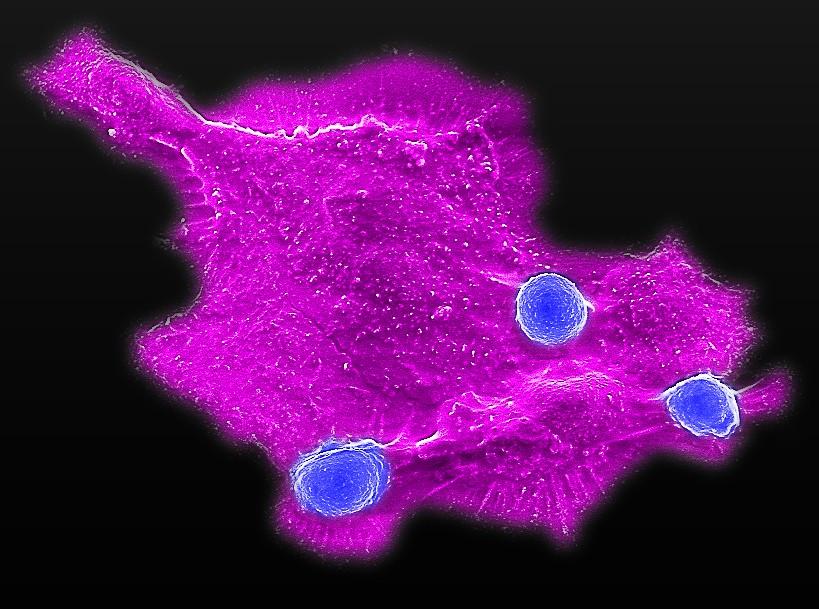
The platform harnesses rare and powerful immune cells called natural killer T (NKT) cells. For this application, Yang’s team engineers these cells with a chimeric antigen receptor (CAR) that targets CD19, a protein found on the surface of B cells — the immune cells that produce the autoreactive antibodies that attack the nervous system in MS patients.
But B cells are only part of the problem. NKT cells also carry a receptor that recognizes and attacks inflammatory myeloid cells — such as macrophages — that accumulate at sites of damage in the CNS and are a major driver of MS progression.
“Regular CAR-T cells will wipe out the bad B cells, and we can do the same — but we do more than that,” said Yang, a professor of microbiology, immunology and molecular genetics and member of the UCLA Broad Stem Cell Research Center. “The CAR-NKT cells can also use their natural receptor to attack the inflammatory myeloid cells that are causing so much of the CNS damage. They work on two fronts. That’s very important for dealing with this disease.”
Because the CAR-NKT cells remain active in the body as a “living drug” for months to years, they provide a sustained therapeutic effect that daily or weekly medications cannot match. And because new B cells produced by the bone marrow take a long time to become autoreactive, a single treatment course may be enough to reset the disease clock — with redosing possible if needed.
“With this approach, we hope to achieve a much more significant delay — or even a cure,” said Yang, who is also a member of the UCLA Health Jonsson Comprehensive Cancer Center. “If we can truly reset the immune system, we may be able to keep another serious attack at bay indefinitely.”
One of the most significant advantages of the platform is its potential to reach patients who would otherwise have no access to advanced immunotherapy. Traditional cellular immunotherapies are manufactured individually for each patient — a process that can take weeks and cost hundreds of thousands of dollars. Yang’s approach upends that model.
Because NKT cells are by nature compatible with any patient’s immune system, they can be produced in large batches from donated cord blood stem cells, then frozen and made ready for immediate use. A single cord blood donation can yield enough cells for thousands of doses.
“We estimate the cost to produce one dose could be as low as $5,000,” Yang said. “And those cells are universal — we don’t need to customize them for each individual patient. They’re made. They’re ready.”
Promising preclinical results and a path to clinical trials
The team has already generated encouraging evidence in an established preclinical model of human MS, in which mice develop paralysis through the same immune-mediated mechanism that damages the CNS in patients. CAR-NKT cell treatment clearly prevented that outcome.
“It’s not just a cellular or molecular readout,” Yang said. “It’s a real, actual benefit we see in mouse models of the disease.”
The team has also completed a successful pre-IND meeting with the FDA, which provided clear guidance on the steps required to advance to a clinical trial. Manufacturing will be carried out in UCLA’s Center for Advanced Biotherapies, which has validated processes for producing stem cell-derived immune cell products.
By the end of the 2.5-year grant period, Yang and her colleagues aim to have an IND clearance in hand, a clinical-grade product ready for patients and at least hundreds of doses manufactured.
Yang is joined on the project by Dr. Sarah Larson, a clinician who specializes in CAR-T cell therapy clinical trials and has collaborated with Yang for years on blood malignancies, and Dr. Eric Williamson, neurologist specializing in MS patient care who will lead the development of the clinical protocol and guide the team’s understanding of what matters most to patients.
If the therapy proves effective for MS, Yang sees a clear path to other autoimmune conditions driven by autoreactive antibodies, including systemic lupus erythematosus and rheumatoid arthritis. Because the team plans to manufacture hundreds to thousands of doses, clinical testing in additional disease indications could begin without a separate manufacturing campaign.
The MS grant is the latest in a series of CIRM-funded efforts to advance Yang’s CAR-NKT platform across a range of diseases. Her lab is also developing CAR-NKT cell therapies for a range of cancers including that of the breast, prostate, ovaries and pancreas.
“That’s what we are really excited about,” Yang said. “The fundamental reason we designed this platform from the beginning was to help as many people — and address as many medical needs — as possible.”
Contact
Contact
Meet the Researchers
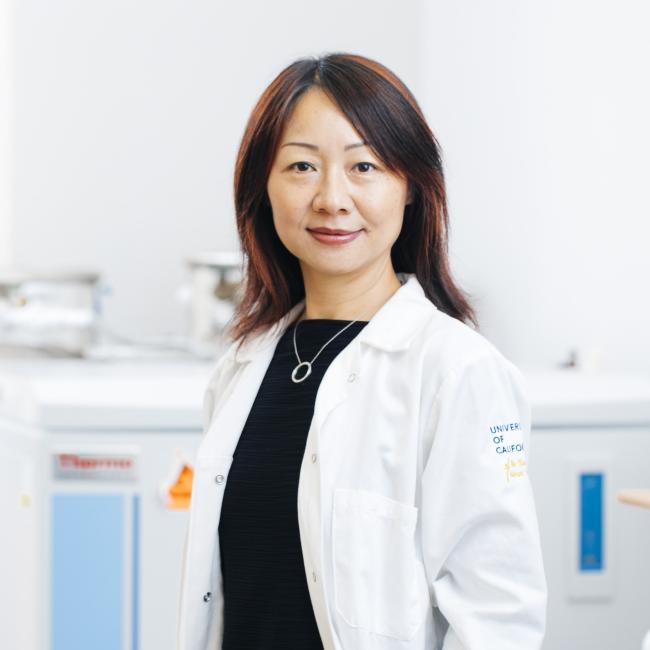
- Professor, Microbiology, Immunology and Molecular Genetics