
Innovative Collaboration Funded by ARPA-H THRIVE to Develop Affordable Gene-Editing Therapies for Rare Immune Diseases in Children
Every year, several thousand newborns in the US are diagnosed with a group of genetic disease called inborn errors of immunity (IEI). While each child could, in principle, receive a personal, one-time therapy that repairs the disease-causing mutation via the Nobel prize-winning technology of CRISPR gene editing, there are no approved medicines and no ongoing clinical trials in the US to develop such treatments. Of the 500 known IEIs, only two currently have approved genetic therapies, each costing well over $1M per child and requiring extensive hospitalization.
With the goal of building a scalable and affordable solution to this challenge, the US HHS Advanced Research Projects Agency for Health (ARPA-H) has awarded up to $27.7M to a team of physicians and scientists led by the Innovative Genomics Institute (IGI) at the University of California, Berkeley, as part of its Treating Hereditary Rare Diseases with In Vivo Precision Genetic Medicines (THRIVE) program. THRIVE is led by ARPA-H Program Manager Daria Fedyukina, Ph.D. The IGI was founded by the co-inventor of CRISPR gene editing, Jennifer Doudna, with the mission of translating the revolutionary tool into affordable and accessible solutions in human health.
The collaborative research project, known as AEGIS (Affordable Gene Editing Therapies for Immune System Diseases of Children), combines the strengths of a group of academic, clinical, industry, and nonprofit partners to develop an end-to-end approach to rapidly develop therapies for inborn errors of immunity (IEIs). The team includes world-leading physicians in treating the inborn errors of immunity at the University of California, Los Angeles (UCLA), the University of Utah / Intermountain Primary Children’s Hospital, and Mayo Clinic, experts in developing gene editors at the IGI, University of California, San Diego, and Princeton University, experts at engineering novel ways to deliver such editors to the patients’ bone marrow at Emory University, and leaders in prenatal diagnosis of pregnancies at risk of having a child with such a disease at Stanford University. ARPA-H has funded this team to treat 10 children within the next five years using personalized gene editing by innovating methods of editor engineering, derisking, manufacturing, and delivery. Leveraging substantial regulatory momentum and leadership by the U.S. Food and Drug Administration, the team seeks to drop the time to developing such a personalized editor to below three months and at a cost below $200,000.
Addressing the root cause of rare immune diseases
The unmet medical need in this disease space is formidable. The lead principal investigator of the upcoming clinical trial is Donald B. Kohn, M.D., Distinguished Professor, Departments of Microbiology, Immunology & Molecular Genetics, Pediatrics, and Molecular & Medical Pharmacology, University of California, Los Angeles. Dr. Kohn brings 35 years of experience developing and clinically trialing genetic medicines for pediatric IEIs to the project, including his leadership of a clinical trial that resulted in an approved genetic medicine for one such IEI.
“I often receive e-mails from my patients thanking me for the genetic therapy that they received as infants,” says Kohn. “I know from clinical practice how powerful these treatments have been, and I am equally aware that in their current form, they are prohibitively time consuming and expensive to develop and administer outside of initial clinical trials. I see the ARPA-H-funded effort as a ‘cut the Gordian knot’ innovative approach to the problem in which each child will have a personal gene editor administered via a simple injection. There are dozens of children on clinical service here at UCLA that are outstanding candidates for such therapies, and I am convinced that now is the time to take the bold step of putting a wealth of technological and clinical innovation to use with the goal of treating them.”
Children are born with, and suffer from, inborn errors of immunity all over the US, and the ARPA-H-funded effort is explicitly configured to yield a nationwide solution to the challenge of delivering curative therapies. In addition to UCLA, two leading centers of clinical excellence in this space in Utah and Minnesota will treat children with personal gene editors.
The clinical trial co-PI at the University of Utah is Michael A. Pulsipher, M.D., Presidential Endowed Chair in Pediatric Oncology/Hematology, University of Utah; Division Chief of Pediatric Hematology/Oncology at Intermountain Primary Children's Hospital; and Director of the Children's and Adolescent Cancer Initiative at Huntsman Cancer Institute. “Over decades of practice here I have treated children from throughout the intermountain west, Utah, Nevada, Arizona, Colorado, Wyoming, Idaho, and Montana and beyond. Every child brings their own personal and clinical story, but what unites them is a critical need for curative treatment prior to life-threatening infection, and an unfortunate risk they are forced to take for therapy, most often undergoing a life-threatening, intensive bone marrow transplantation when we should be more safely correcting their genetic disease using technologies like CRISPR editing,” says Pulsipher. “Like Dr. Kohn I have also seen first-hand how powerful such therapies can be. The catchment area of my clinical practice is one fifth of the entire US, and while I am mindful of the many challenges ahead in our work, I have a strong conviction that success in our effort will resonate across our entire country.”
The clinical trial co-PI at Mayo Clinic is Avni Y. Joshi, M.D., M.S., Professor of Pediatrics and of Medicine, Chair of Division of Pediatric Allergy/Immunology at Mayo Clinic Children’s. Like her clinical partners on the ARPA-H THRIVE-funded effort, Dr. Joshi is an expert at treating children with inborn errors of immunity.
“This project represents an extraordinary opportunity to rethink what is possible for children with rare inherited immune disorders. By combining advances in gene editing with new approaches to delivery and access, we hope to create therapies that not only treat disease but address its root cause and ultimately improve the lives of patients and families,” says Joshi. “Mayo Clinic is the largest integrated, not-for-profit medical group practice in the world with over 70 clinics and hospitals in the Midwest, Arizona, and Florida, and just like Drs. Kohn and Pulsipher, I have no shortage of children and adolescents and young adults who could benefit from their own personal gene editor.”
Why now is the time to act on inborn errors of immunity
The AEGIS project is led by Fyodor Urnov, Ph.D., Professor of Molecular Therapeutics at UC Berkeley and Director for Therapeutic R&D at the Innovative Genomics Institute. Dr. Urnov co-developed the foundational toolbox of gene editing, co-named the technology, and led the team that discovered the gene editing strategy for the first approved gene editing medicine, Casgevy for sickle cell disease and beta-thalassemia. Dr. Urnov also led the IGI team that supported physicians and scientists at the Children’s Hospital, Philadelphia and Penn Medicine in their work to develop a CRISPR on-demand therapy for a child with CPS1 deficiency.
“I had the good fortune of being on the team that attained the first-ever native human gene-edit,” says Urnov. “This was in 2004 and we fixed a mutation in a gene that causes an inborn error of immunity. Two decades later, that disease is not clinically treated by gene editing, nor is any pediatric IEI. We are finally in a position to end this unacceptable gap between bench and bedside. We have all the technology components required to have a platform for IEI gene editing on-demand. We have the clinicians ready to do the trial. We have substantial regulatory wind in our sails. The ARPA-H funded effort enables us to bring all the tiles of this jigsaw puzzle into a ‘no mutation and child left behind’ therapeutic platform.”
Some 20,000 genetic variants are known to cause the IEIs, and less than half can be repaired using the 2026 toolbox of CRISPR. The ARPA-H funded team brings together two leading experts in gene editor engineering to solve this problem.
Alexis C. Komor, Ph.D., Professor, Department of Biochemistry and Molecular Biophysics, University of California, San Diego, co-invented a leading therapeutic strategy in CRISPR, base editing.
“In the decade since we first got base editing to work it has grown substantially in its efficiency and scope. The work I will lead in the ARPA-H-funded effort will be the first of its kind to decisively take on mutations causing inborn errors of immunity. My lab has invented new ways to fine-tune base editing, and I am thrilled at the opportunity to point this experimental firepower at this disease indication,” says Komor.
Britt Adamson, Ph.D., Associate Professor, Department of Molecular Biology and the Lewis-Sigler Institute for Integrative Genomics, Princeton University, is a pioneer of scaling CRISPR technologies across the human genome and will lead the charge on developing gene editing strategies with a second CRISPR approach, prime editing.
“Developing prime editing strategies, in parallel to Dr. Komor’s efforts, will expand the range of mutations that can be targeted. However, prime editing has different engineering considerations, and identifying effective reagents for the approach can require extensive optimization. This THRIVE program therefore represents an exciting opportunity to develop methods that greatly accelerate that design process within a focused disease area, while also generating resources with potentially broader impact,” says Adamson.
All current genetic medicine trials and approved therapies for blood diseases are severely limited in scope because the patient’s stem cells have to be removed from the body, genetically engineered, and transplanted back following chemotherapy. The ARPA-H-funded project seeks to eliminate these steps by putting to use a newly invented toolbox of delivering gene editors directly to the patient’s bone marrow, where the stem cells reside, by injection of the editor formulated in a specialized form of a lipid nanoparticle. While such lipid nanoparticle -based delivery of gene editors is already a mainstay of CRISPR gene editing trials in settings where the liver is the targeted organ, until now such delivery to the marrow remained out of reach. The team’s scientific leads for in vivo delivery are Hyejin Kim, Ph.D., and James E. Dahlman, Ph.D., who is the McCamish Early Career Professor, Wallace H. Coulter Department of Biomedical Engineering, Georgia Tech and Emory School of Medicine.
“CRISPR is a versatile technology that can be programmed to edit any gene of interest. Our area of expertise and practice is the programming of lipid nanoparticles to get to desired cell types in the human body,” says Kim. “We have recently developed LNPs that efficiently deliver cargo to the bone marrow of both mice and nonhuman primates. The inborn errors of immunity are a superb fit for this technology’s first foray into the clinic because in many cases a modest level of mutation correction would be sufficient for clinical benefit.”
Faster therapies, lower cost
While the most severe forms of inborn errors of immunity are diagnosed via newborn screening, the overwhelming majority place the children on a diagnostic odyssey that can last years. What if pregnancies at risk of a child being born with an IEI could be diagnosed before birth? This is one of the uniquely ambitious goals of the THRIVE project, led by a Stanford Team headed by Euan A. Ashley, MB ChB, DPhil, FRCP, Roger and Joelle Burnell Professor of Genomics and Precision Health; Chair, Department of Medicine, Stanford University. Dr. Ashley brings decades of leadership and innovation experience to the genomic medicine space; recently, his laboratory has been developing sensitive new methods to diagnose a pregnancy at risk using fully noninvasive technologies.
“My colleagues on the ARPA-H program will aim to build a gene editor with a personalized guide RNA in a few short months,” says Ashley. “I think it’s ambitious but realistic to look towards a future where the clock of developing a personal CRISPR for a child starts 20 weeks before birth, such that the on-demand guide RNA component is designed and derisked and ready to administer shortly after birth.”
A major component of the high cost behind all genetic therapies is their manufacture. To this end, the IGI brings to the THRIVE effort an ongoing partnership with Danaher Corporation, a global leader in manufacturing CRISPR components for clinical use, whose operating companies Integrated DNA Technologies (IDT) and Aldevron manufactured the drug product used to treat the child on clinical service at CHOP with CPS1 deficiency. Sadik Kassim, CSO/CTO, Danaher Omics Solutions Group said, “We are delighted that the IGI-led team has deepened our partnership by selecting Danaher as the provider of the actual gene editors for the 10 children that the program aims to treat. Our operating companies, in particular Aldevron, have made a strong commitment to engineering smaller-scale, accelerated manufacturing solutions for the CRISPR on-demand space, and we are delighted to be supporting this impressive multi-institution team.”
UC Berkeley’s motto is “Fiat lux” or “let there be light.” It represents a foundational commitment to ensuring all our work benefits society broadly. To this end, the IGI will make all the nonclinical data, regulatory correspondence, and clinical trial results from the ARPA-H THRIVE effort freely available to the US and global healthcare community.
Meet the Researchers
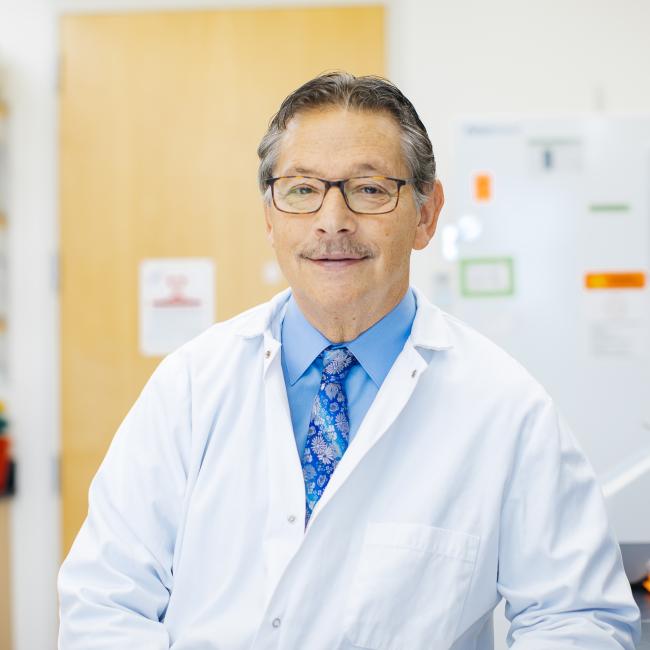
- Distinguished Professor, Microbiology, Immunology and Molecular Genetics