
Neurological Diseases, Disorders & Injuries
Our researchers are using stem cell-based models to gain unprecedented insights into human brain and nervous system development, disease and repair.

Overview
Diseases, disorders and injuries of the brain, spinal cord and nervous system can profoundly affect how people think, move, communicate and live. Yet for many neurological conditions, effective treatments remain limited or nonexistent.
One of the greatest barriers to developing new therapies is the extraordinary complexity of the human brain itself. Human brain tissue is difficult to access, and traditional laboratory and animal models cannot fully reproduce the cellular interactions and developmental processes that shape human neurological development and disease.
UCLA researchers are overcoming these barriers using human stem cellsCells that have the ability to differentiate into multiple types of cells and make an unlimited number of copies of themselves.stem cellsCells that have the ability to differentiate into multiple types of cells and make an unlimited number of copies of themselves., 3D brain organoids and computational tools to recreate aspects of the human nervous system in the laboratory. These models are revealing how the brain develops, what goes awry in conditions ranging from autism and epilepsy to Alzheimer's disease, and where new opportunities for treatment may lie.
At the same time, our scientists are working to harness the nervous system’s remarkable capacity for repair — developing strategies to regenerate damaged tissue, rebuild neural connections and restore both motor and sensory function following stroke, spinal cord injury and other neurological damage.
Explore how our researchers are working to understand, protect and repair the nervous system.
Our Goals
-
The challenge: Understanding the complex genetic and cellular interactions underpinning neurological conditions remains a major hurdle in developing targeted, effective treatments.
Our researchers’ solutions:
- Identifying the common genetic variants that impact a person's risk of developing Alzheimer's, autism, multiple sclerosis, obsessive compulsive disorder and other challenging brain conditions to inform therapeutic development
- Using human stem cell-based models to uncover the molecular and cellular mechanisms underlying autism and schizophrenia and to identify drug targets for both conditions
-
The challenge: Access to living human brain tissue is extremely limited, making many neurological processes difficult to study directly.
Our researchers’ solutions:
- Developing and studying human stem cell-derived 3D brain organoid and assembloid models to pinpoint the neurological processes underlying development and diseases including epilepsy and dementia, informing potential targets for prevention or treatment
-
The challenge: In neurodegenerative diseases, particular populations of brain cells progressively lose function or die. Why some cells are especially vulnerable — and how aging, immune responses and cellular stress contribute — remains an ongoing question for scientists seeking new strategies for protecting the brain.
Our researchers’ solutions:
- Understanding how the production of new neurons declines with age in order to develop drugs that promote the growth of new neurons
- Investigating how the brain's immune and support cells influence the progression of neurodegenerative diseases, with a focus on finding new treatment strategies
- Understanding why prolonged activation of stress pathways selectively impairs vulnerable brain cell types and contributes to neurodegenerative diseases in order to identify prevention strategies
-
The challenge: Damage to the nervous system can permanently disrupt movement, sensation and other essential functions, having profound impacts on patients’ quality of life.
Our researchers’ solutions:
- Devising techniques to produce all subtypes of sensory interneurons from human stem cells, enabling the creation of stem cell therapies to restore sensation in people with spinal cord injuries
- Developing drugs and stem cell therapies that enhance the brain's inherent ability to repair itself after a stroke
-
The challenge: Brain cancers and infections that invade the central nervous system present distinct treatment challenges because of the brain's unique biology and protective barriers.
Our researchers’ solutions:
- Uncovering how certain viruses penetrate the blood-brain barrier and attack the brain to inform the development of therapies that protect against these neuroinvasive infections
- Pinpointing how brain tumor stem cells grow and evade treatment to inform the development of more effective treatments for brain cancers
Building Better Models of the Human Brain
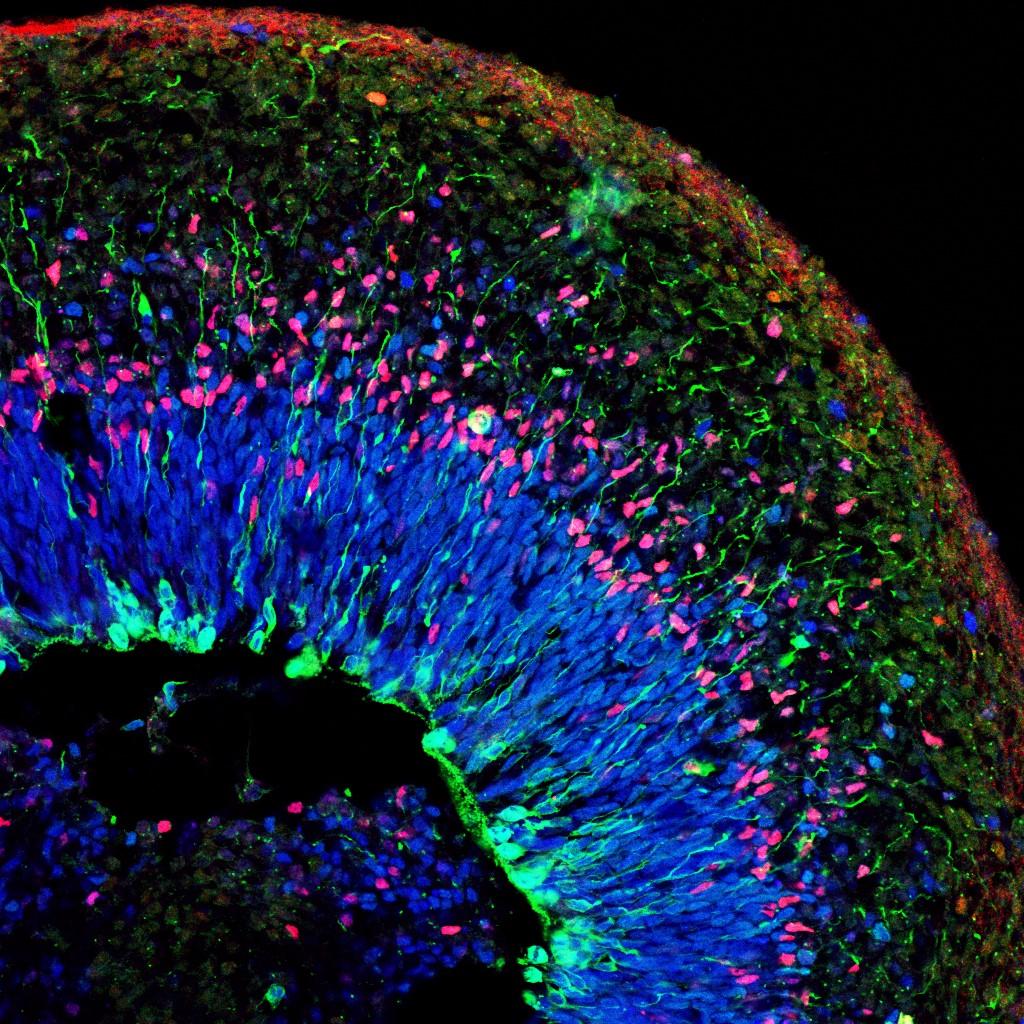
UCLA scientists are using human stem cells to grow 3D structures called brain organoids and assembloids that recreate aspects of the organization and function of human brain tissue.
These models allow researchers to investigate neurological conditions in human cells, observe disease processes that were previously difficult to study and test potential treatments.


To learn about our research into neuromuscular conditions including muscular dystrophies, visit the Bone & Muscle Diseases & Injuries research area.
Research Highlights

Reversing vascular dementia
Center researchers use a repurposed drug to promote brain repair and functional recovery in mouse models of vascular dementia.

Repairing brain damage after stroke
UCLA researchers discover the first drug to fully reproduce the effects of physical stroke rehabilitation in mouse models.

Genetic risk for autism
UCLA scientists unveil the first link between underlying genetic causes for autism and observed cellular and genetic activity across different layers of the brain.

Modeling brain diseases
Our scientists create 3D brain organoids using stem cells derived from patients with Rett syndrome to examine patterns of seizure-like electrical activity, investigate underlying causes of the disease and test potential therapies.

Promoting recovery from stroke and dementia
Center members develop a stem cell therapy that has been found to help repair brain damage and improve memory function in mice with conditions that replicate human strokes and dementia.

Accelerating recovery after nerve injuries
Our researchers discover a molecular process that controls the rate at which nerves grow during development and recovery from injury, revealing a target for therapies that accelerate this process.

Understanding the developing nervous system
Center researchers overturn a long-standing paradigm about how axons grow during embryonic development, a finding that could improve therapies for nerve injuries or diseases such as diabetes.

Uncovering human brain development
Our researchers discovered hundreds of thousands of new gene transcripts, providing a comprehensive dataset that could improve the ability to make genetic diagnoses and treat neurodevelopmental disorders.

Using organoids to model childhood epilepsy
UCLA researchers use patient-derived stem cells to model how gene variants that cause a rare genetic childhood epilepsy affect different brain regions.

How brains resist Alzheimer’s
Center scientists uncover why certain brain cells resist the toxic protein buildup that is a hallmark of neurodegenerative disease.


Related News


Jul 29, 2026


